
Upright bass players
Learn bass lines from the recordings you love.
Pull the upright bass out of a jazz, bluegrass or classical recording. Hear every note of the bass line on its own.
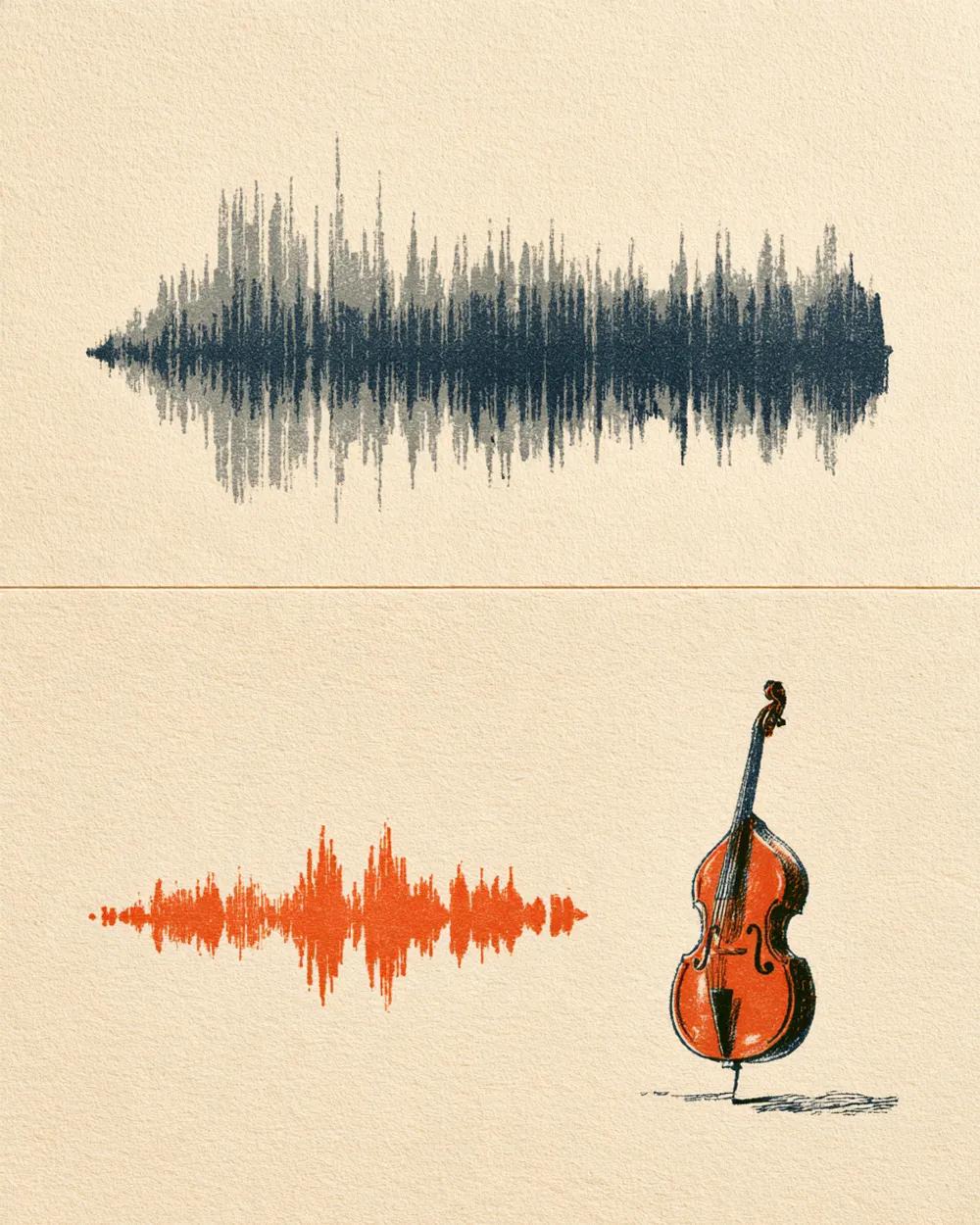
In jazz, the bass line changes in every chorus. On its own, you can hear each note and copy it.
Take the bass out and play it yourself with the real drums and piano.
Made for the sound of an upright bass played with fingers or a bow.
The details, before you upload.
It takes three steps.
Drop an audio or video file (MP3, WAV, FLAC, M4A, MP4, MOV, WebM, MKV) or paste a public YouTube or TikTok link on this page.
The mode is already chosen for you. You can leave the page while it works.
Play each track in your browser, then download the ones you need.
Learn bass lines from the recordings you love.

Transcribe walking lines from classic records.

Practise with a recording that has no bass.

Replace or reinforce an upright bass in a mix.
Yes. When you sign up with Google, you get 10 free minutes to try the Double Bass Extractor on your own files. No credit card is needed. You can listen to every track in your browser.
Upload the recording and start. You hear the upright bass alone, whether plucked or bowed. The rest of the ensemble is saved separately.
The Bass Extractor is for the bass in modern songs. This one is for the upright bass in acoustic music.
Yes. Without the double bass, you have the drums, piano and the rest of the group. A bassist can play along.
No. Use it on any recording with an upright bass: jazz, bluegrass, rockabilly or classical.
Audio files (MP3, WAV, FLAC, M4A), local video files (MP4, MOV, WebM, MKV—audio is extracted locally in your browser), or public YouTube and TikTok video links. Results download as MP3, WAV (32-bit float) or FLAC (24-bit).
Other ways to split audio.
Drop an audio or video file—or paste a YouTube or TikTok link—and hear each track.